Samsung SDS Showcases Public AX Innovation Use Cases Built on Its AI Full-Stack at the Korea Public AI Expo 2026
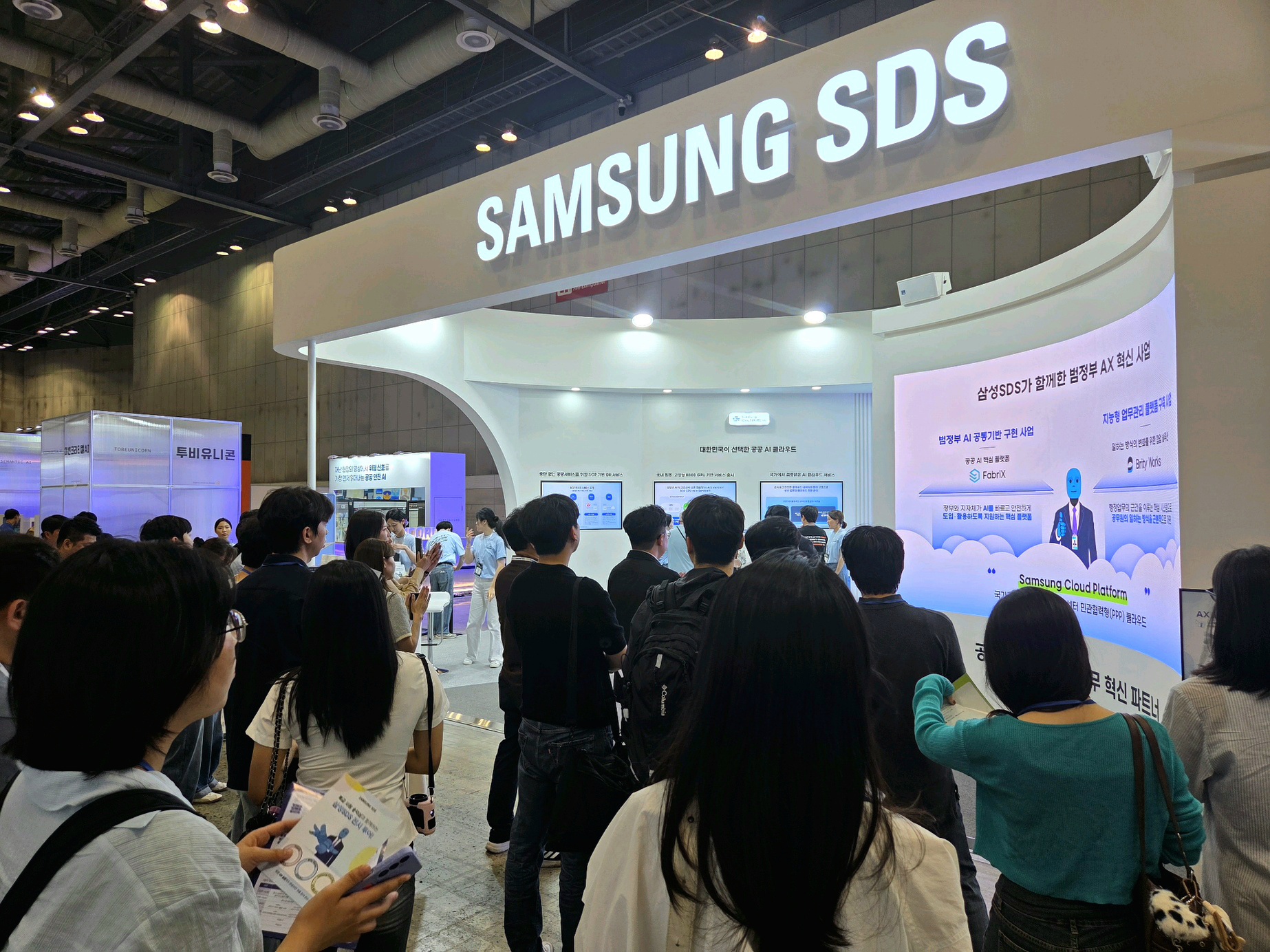
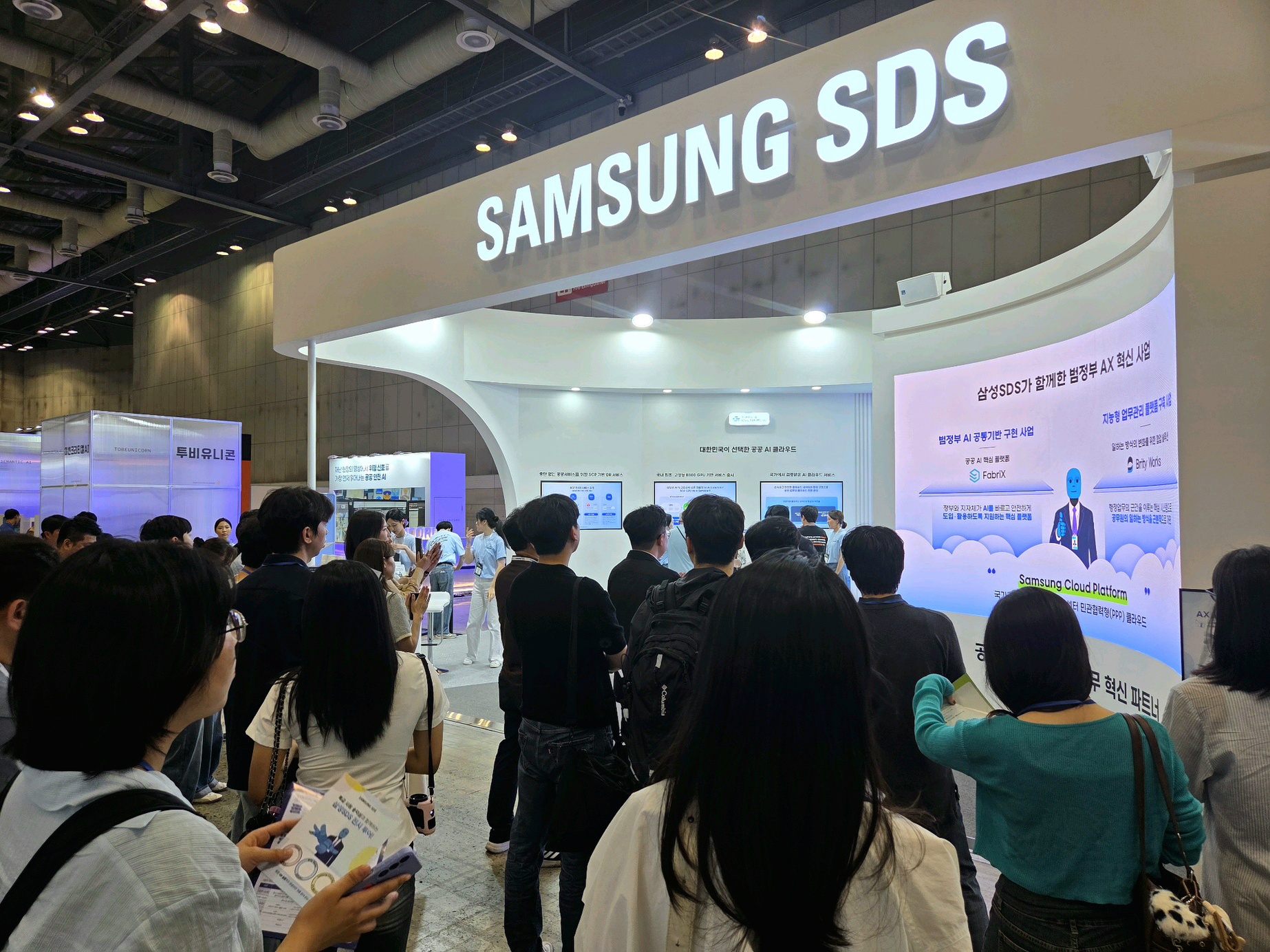
□ Introduced AI full-stack capabilities based on FabriX, Brity Works, and AI Data Center
□ Provided hands-on experiences ranging from AI agents to mobile collaboration to public AI infrastructure
□ Presented public AX strategies at local government AI innovation and technology forums
Samsung SDS participated in the Korea Public AI Expo 2026 held at KINTEX Exhibition Hall 2 in Ilsan from June 23rd to June 24th. During the expo, the company showcased AI services designed to drive innovation in administrative work and public services.
Hosted by the Ministry of the Interior and Safety and organized by the National Information Society Agency (NIA), the expo brought together central and local government officials responsible for digitalization and administrative innovation, as well as private companies. Participants shared AI transformation (AX) strategies and innovation use cases in the public sector. A total of 56 exhibition booths were featured, with 52 run by private companies and 4 by public institutions.
At the event, Samsung SDS showcased its AI full-stack capabilities for the public sector – built around its AI agent platform FabriX, the AI collaboration solution Brity Works, and AI Data Center -- and presented AX innovation strategies.
At the exhibition zone themed ‘Customized AI Agents for Departments,’ Samsung SDS showcased public sector innovation use cases powered by FabriX. These included an AI civil complaint support service that automatically summarizes and routes public complaints to relevant departments; an AI-based procurement law interpretation service; and the Government24 AI search service for the public. Visitors could also experience the FabriX-powered Government24 AI search service firsthand.
In the zone themed ‘Mobile-Enabled AI Collaboration Solutions for Public Work,’ visitors experienced a mobile collaboration environment based on Brity Works. Samsung SDS introduced features that enable users to work anytime, anywhere, such as daily briefings on the go, document search and sharing, and real-time mobile meetings. Visitors could also explore mobile-based information search and meeting features powered by Perplexity.
Under the theme ‘Public AI Cloud Chosen by South Korea,’ another exhibition zone showcased Samsung SDS’s public AI infrastructure capabilities based on Samsung Cloud Platform (SCP) and its AI Data Center.
As a Public-Private Partnership Cloud (PPP) operator for the Daegu Center of the National Information Resources Service (NIRS), Samsung SDS has a robust cloud foundation necessary to stably operate information systems for public institutions.
In addition, Samsung SDS unveiled its AI infrastructure operations strategies and its disaster recovery (DR) service blueprints linking the Daegu Center, Samsung SDS’s Dongtan Data Center, and the National AI Computing Center in Haenam.
Notably, the company also displayed the actual NVIDIA B300 (Blackwell Ultra) GPU used in the GPU-as-a-Service (GPUaaS), which was launched in March as the first service of its kind in Korea.
During the event, Samsung SDS operated an AI business-matching consultation booth, where the company proposed AI adoption and utilization plans to officials from central government ministries, local governments, and public institutions. On June 24th, the company presented AX strategies for local government innovation at the ‘Network Forum for Sharing Local Government AI Innovation Cases’ and also shared its AI- and cloud-based public AX strategies and use cases at the ‘AI Innovation Enterprise Technology Forum.’
Jeong-heon Lee, Executive Vice President and Leader of the Strategic Marketing Office at Samsung SDS, said, “Workplace innovation powered by generative AI and AI agents is now gaining momentum in the public sector as well. Leveraging our capabilities in delivering domestic AI infrastructure projects and the AX know-how we have accumulated across various industries, we will actively support AI innovation across governmental and public institutions.”


