Samsung SDS Wins Seoul National University’s Contract to Build Next-Generation Network Platform for AI-Native Campus
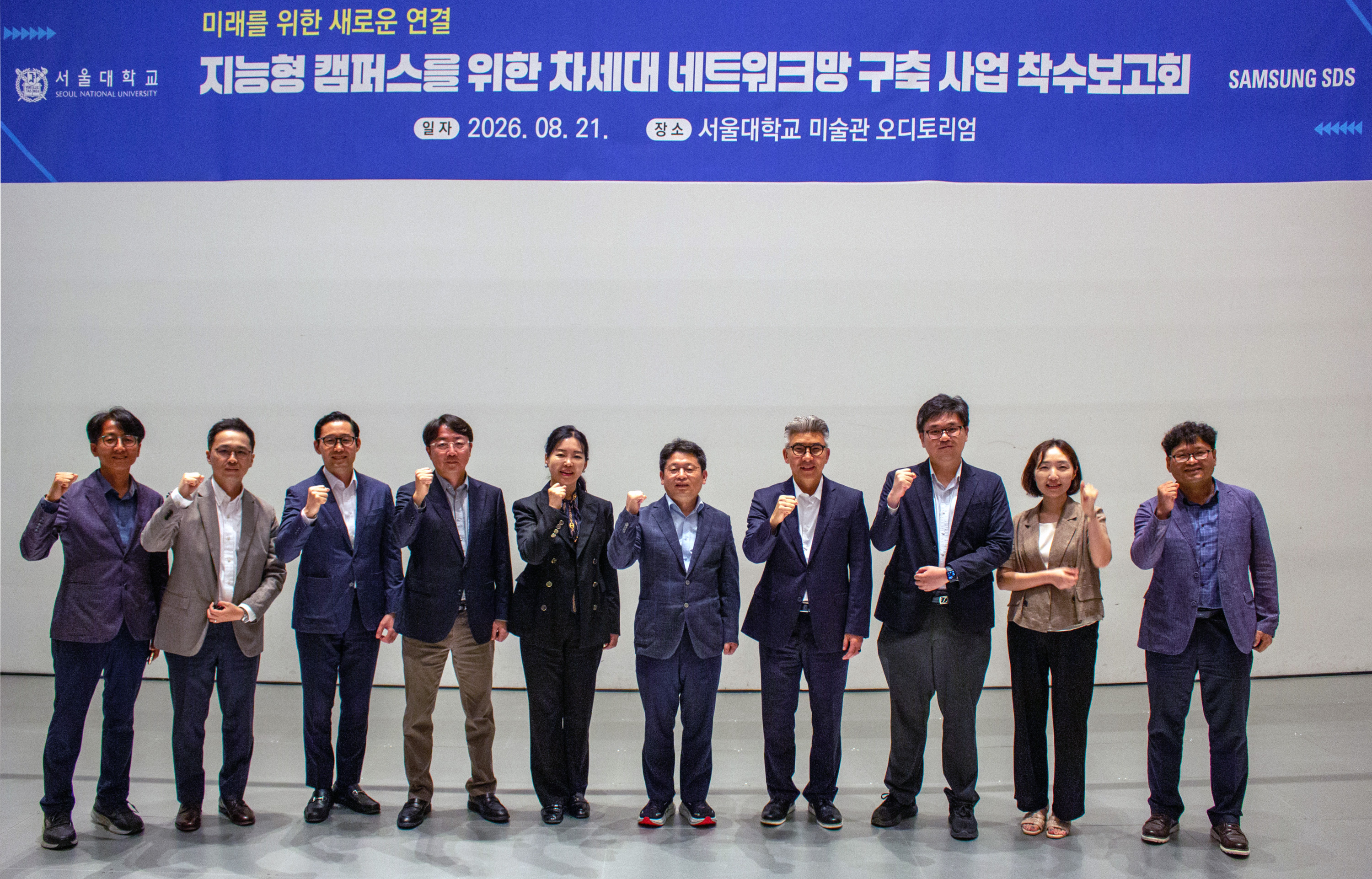
□ Samsung SDS to comprehensively upgrade Seoul National University’s network infrastructure, laying the foundation for AI-native campus
- Supporting the transition to an AI-native campus through high-bandwidth networks supporting AI research and training
- Enhancing campus networks spanning 243 facilities and serving 50,000 users
- Enabling network service innovation that offers tangible benefits to students, faculty, and staff
□ Samsung SDS to strengthen next-generation network business based on proven capabilities in large-scale network operations and automation
- Designing, deploying, and operating software-defined network serving approximately 80,000 users across 13 global hubs
- Strengthening security and operational efficiency through software-based network segmentation and AI-powered network service automation
- Expanding next-generation network business to support the AI transformation of companies, public institutions, educational institutions, and healthcare organizations
Samsung SDS achieved a major contract win, securing Seoul National University’s next-generation network platform project to support the university’s intelligent campus initiative, once again validating the company’s competitiveness in large-scale AI infrastructure and network deployment.
□ Supporting Seoul National University’s shift to next-generation network for AI research and training
The project will establish high-performance network infrastructure needed for AI research and training, laying the foundation for Seoul National University’s transformation into an “AI-native campus” optimized for the age of AI.
With this, Seoul National University will transition to an ultra-high-speed, high-bandwidth network environment supporting speeds of 800 Gbps, enabling the rapid transfer of large volumes of data required for AI research. The university will also enhance wired and wireless connectivity across its campus, comprising 243 facilities and serving approximately 50,000 people. In addition, the university will strengthen security through logical network segmentation and automate network management, enhancing both network stability and operational efficiency.
□ Building an intelligent campus delivering benefits across the university
Through this project, Seoul National University will significantly enhance its network services, delivering tangible benefits to students, faculty, and researchers.
Students will enjoy stable, reliable network access throughout the campus, including classrooms, research labs, and libraries. Network slowdowns and disruptions will be minimized, while a user-centric environment will make it easier to register for and access the services they need.
Meanwhile, professors and researchers will be able to rapidly and reliably transfer large volumes of data for AI training and research over the high-bandwidth network, allowing them to conduct data-intensive AI research more efficiently.
For IT staff, automating repetitive tasks such as user device authentication and network service provision will reduce operational workloads. In addition, an intelligent maintenance environment capable of detecting network failures and anomalies will enable more stable and efficient management of extensive campus networks with limited operational staff.
□ Leveraging large-scale SDN design and operational capabilities for the university’s next-generation network
For the project, Samsung SDS will leverage the technological expertise and know-how gained from deploying its software-defined network (SDN) solution, which serves nearly 80,000 users across 13 global hubs, to build Seoul National University’s next-generation network.
SDN is a technology that enables comprehensive control and management of an entire network through software, replacing the conventional approach of configuring and managing individual network devices separately. It allows for consistent, centralized management of network policies and services while automating network configuration in response to user requests.
Capitalizing on its SDN capabilities, Samsung SDS will support integrated management of Seoul National University’s extensive campus networks while enabling faster delivery of network services and greater operational efficiency.
□ Implementing software-based network segmentation to protect research assets while enhancing convenience through a network automation portal
As part of the project, Samsung SDS will also implement software-based network segmentation to strengthen security across the campus network. Networks with different characteristics and purposes, such as those used for research, administration, and education, will be logically segmented to restrict unnecessary access between them and minimize the risk of security threats spreading across the network. This approach will also allow network policies to be flexibly applied based on users’ roles and tasks, effectively supporting university environments where collaboration with external institutions and companies is active.
Furthermore, Samsung SDS will build a user-centric network automation portal based on SDN. The portal will allow users to directly request services previously handled by network operators, such as IP address allocation and lookup, device registration, and new network provisioning, with network configurations automatically applied based on predefined policies and procedures.
□ Expanding next-generation network business for the AI era
As AI services become increasingly prevalent, not only high-performance computing resources such as GPUs but also network infrastructure capable of rapidly transmitting and processing massive volumes of data are gaining greater importance. Against this backdrop, Samsung SDS will continue to scale up its next-generation network business to support the AI transformation of companies, public institutions, educational institutions, and healthcare organizations, drawing on its substantial experience in large-scale network operations and expertise in SDN and automation.
Kil-kon Ko, Vice President of the Office of Information Systems and Technology at Seoul National University, said, “Through this project, we will establish a strong foundation for an intelligent campus and accelerate digital and AI innovation across education, research, and administration.” He added, “By enhancing our network to better meet the needs of all university members, we will be able to realize Seoul National University’s vision of becoming a global leader in AI.”
Jeong-heon Lee, Executive Vice President of the Strategic Marketing Office at Samsung SDS, stated, “We are pleased to have been selected as Seoul National University’s innovation partner in its transition to an AI-native campus. With strong capabilities in large-scale SDN design, deployment, and operations, Samsung SDS will build an intelligent campus environment that delivers greater stability and convenience, creating a model that can serve as a benchmark for universities worldwide.”


