It’s a familiar scene: a product is approaching a key development milestone but projected cost is above target. Teams begin looking for ways to close the gap through supplier negotiations, RFQs, sourcing events, component substitutions, or design changes.
These efforts can still create meaningful savings. The issue is that now many of the decisions shaping the product’s underlying cost structure have already been made, narrowing the options available to address the cost overrun without affecting performance, quality, timelines, supply, or other product requirements.
That is the difference between cost reduction and design-to-cost. Cost reduction asks where cost can be removed from the product you’ve designed. Design-to-cost asks how to design a product that achieves the right cost and value in the first place.
Product Cost Is Created One Decision at a Time
Establishing target cost is a typical starting point in product development. It identifies where a product needs to land, but it doesn’t determine how the product gets there. As development progresses, decisions around materials, specifications, components, manufacturing processes, and suppliers each influence the product’s eventual cost and the requirements it can meet.
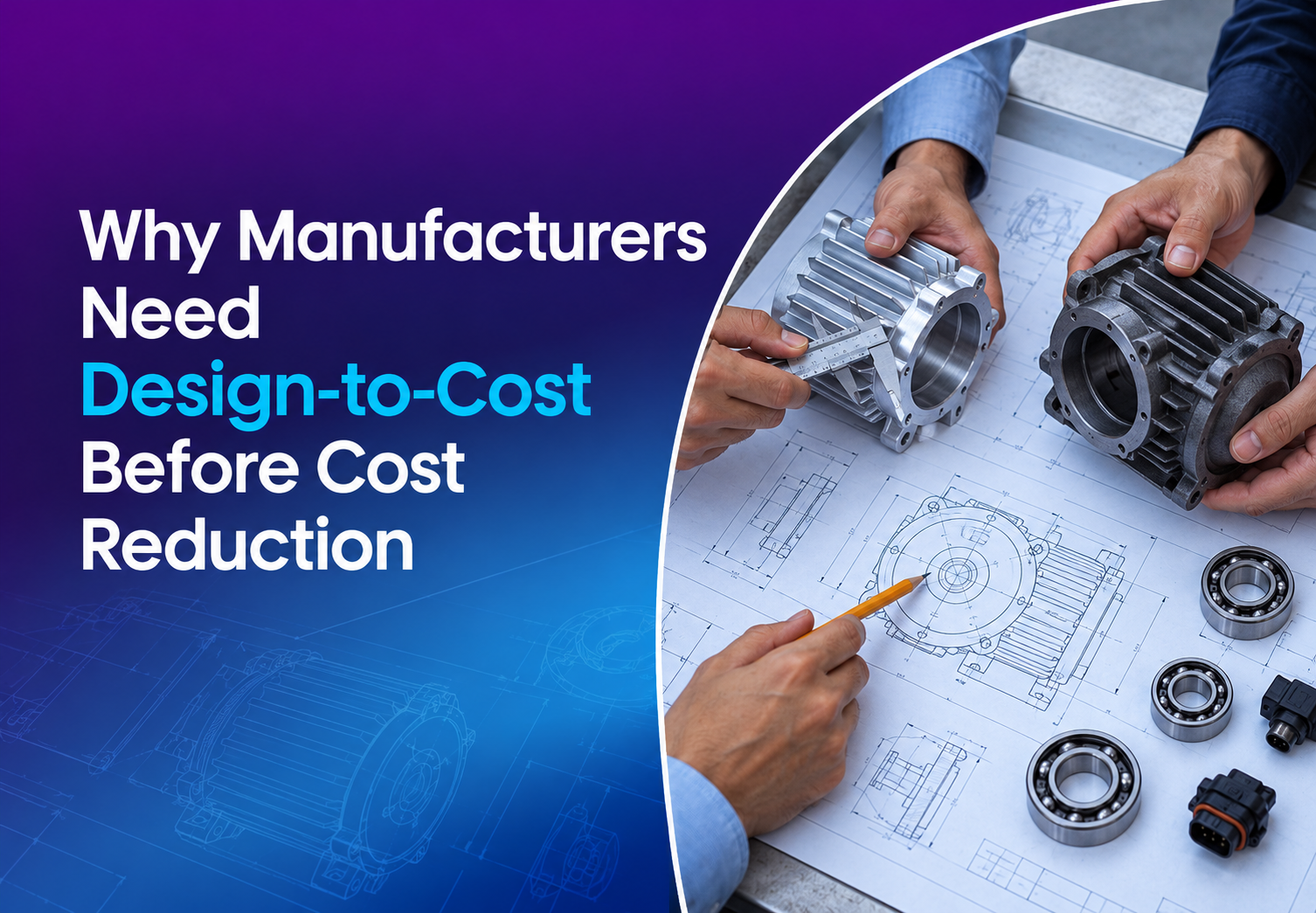
Consider a simple electric motor. Choosing aluminum instead of cast iron can affect material cost, weight, and manufacturing requirements. Adjusting dimensions or tolerances can affect both performance and manufacturing cost. Selecting die casting instead of machining can shift manufacturing expenses further, while standardized bearings or connectors create another opportunity to influence the numbers. The product’s final cost reflects the cumulative impact of these choices, helping explain both what it will cost and why.
That is why design-to-cost does not make cost the priority of every design decision. It makes cost an input to every relevant decision. By understanding what is driving cost at every stage of the development process, teams can make more informed tradeoffs between target cost and performance, quality, supply, and other requirements the product needs to deliver.
Cost Leakage: The Gap Between Target and Reality
A target gives teams something to design toward, but keeping product cost aligned with that target requires visibility throughout development. When the cost implications of decisions aren’t sufficiently understood as they are made, projected cost can gradually drift away from where the product was intended to land.
That gap can develop incrementally. Seemingly reasonable choices may each have a relatively small impact, but together they can create snowballing cost leakage across the bill of materials. Without a clear understanding of what is driving cost up or down, teams may not recognize the extent of that gap until later in development.
By then, fewer choices remain available without revisiting decisions already made. Cost reduction efforts can still create meaningful savings, but earlier cost visibility allows teams to identify cost drivers, evaluate their impact, and make adjustments while the product is still taking shape. Creating more opportunity to shape cost upstream in these ways means less need to correct it downstream.
Better Cost Decisions Require More Than Cost Visibility
Imagine two component options that serve the same purpose. One costs $9, while the other costs $12. The lower-priced option may seem like the obvious choice, but what if it introduces greater supply risk, requires additional testing, or compromises long-term reliability? Understanding the price difference is useful, but it doesn't singlehandedly reveal which component delivers greater business value.
Making that determination requires more than cost data alone. Engineering brings an understanding of design and performance requirements, procurement contributes supplier and pricing intelligence, and supply chain teams provide insight into availability and operational constraints. Finance and suppliers add further perspectives, helping teams evaluate cost alongside the broader requirements and implications of each decision.
These shared insights become especially valuable as product development progresses. With input from cross-functional teams, each design iteration becomes an opportunity to understand why projected costs have increased or decreased, revisit assumptions, and evaluate alternatives. Rather than simply reacting to a changing cost figure, teams can use that holistic understanding to make better-informed decisions in subsequent iterations.
The lesson is clear: if cost is shaped through decisions, then cost intelligence needs to be present when those decisions are being made.
Design-to-Source: The Decision Layer for Design-to-Cost
Making better cost decisions requires more than access to information. Teams need the right information at the right time with the right context to influence design and sourcing strategically.
In practice, the information manufacturers need is spread across different systems and teams. Product lifecycle management (PLM) systems contain important product and engineering information, while enterprise resource planning (ERP) systems support planning and business operations. Supplier capabilities, pricing, sourcing considerations, and other cost-related inputs may reside in additional systems or across different departments. Bringing these perspectives together can be difficult, particularly when teams need to evaluate alternatives during product development.
This is where a connected design-to-source approach becomes essential. As a decision layer connecting engineering, procurement, and supply chain, design-to-source brings product, cost, supplier, and sourcing intelligence into the development process. Rather than treating design and sourcing as separate activities, teams can evaluate tradeoffs with a more complete understanding of their implications for cost, performance, supply, and risk.
Applied to design-to-cost, this connected approach helps teams move beyond tracking projected costs and toward understanding how individual decisions influence those costs. With a clearer picture of the factors behind cost changes, teams can adjust their approach as development progresses rather than waiting until a cost gap demands corrective action.
Manage Cost While You Can Still Shape It
Design-to-cost does not eliminate the need for supplier negotiations, sourcing improvements, or ongoing cost reduction efforts. These activities remain valuable throughout a product's lifecycle. Instead, design-to-cost changes where the cost conversation begins, giving manufacturers more opportunity to influence outcomes before they're cornered into making reactive changes.
The goal isn’t just to design a lower-cost product, but one that achieves the right economics while delivering the business value it was intended to provide. Understanding why projected costs increase or decrease throughout development helps teams determine which adjustments make sense and how to best move forward.
Cost reduction will always have a place in manufacturing, but the strongest approach to managing product cost begins long before there's a cost problem to solve.
Continue reading about ways to reduce your manufacturing costs in this related analyst report from The Hackett Group.